WTF is Community
Not a rhetorical question

It was worth going back to La Palma even if only to strengthen my relationship with my friend Saidu. I also got to support Martina as she raced her way to third place in a thrilling race with two of the sport’s best. Saidu, my mom, and I supported her during the race. Before the race, I sent out a call for a group run and nearly twenty people joined me for 10 km around Los Llanos, the finish town. I originally felt embarrassed to go back to La Palma but not race. But I always say that running is about more than just racing. This was an opportunity to prove that.

I’ve written before about the purpose of community building. Running provides a powerful emotional connection that can only come from shared physical or emotional effort. We work hard together and then we have a bond. Feeling connected to people helps us feel whole, it helps our lives have meaning. I believe that this kind of connection is uncommon in many peoples’ lives, despite our ability to be constantly in touch via technology. I believe a lot of us are seeking genuine human connection.
Trail runners know the power of such connection. We also understand that it is regularly co-opted by brands to sell their products. Every company wants you to connect those good feelings to their brand, with the implication that such connections are only possible if you buy their products. In trail running you can find all manner of community-themed events: group runs, social media groups, etc. It’s really just an extension of why brands sponsor people like me. I am (theoretically) a well-known and trusted member of the running community. If I use a certain product, I bestow upon it the exalted prestige of my association, encouraging my own followers to buy the products I use. Focusing on community, instead of specific athletes, accomplishes the same goal for brands with less reliance on individuals (who might undermine their own influence through self mockery.)
But when brands use the sense of connection developed by the sport to sell products, it cheapens the experience. The bonds built by running are a function of trust between people, and such trust is by definition non-transactional. It is powerful because of what you share with people, and neither person in the relationship expects anything from the other except honesty. When brands co-opt community to sell products, it makes the relationship transactional. Suddenly people see that there was an ulterior motive all along. We feel taken advantage of and resentful. As a friend recently told me at a recent brand-sponsored event, “if I hear the word ‘community’ again, I’m going to freak out.”

But it doesn’t have to be this way. There are many community running groups that use the sport to authentically lift up others – see Tierra Libre, We Run Long, and Where The Climate Things Are for just three trail running examples. The purpose of my nonprofit Footprints is to use this sense of connection to create tangible projects addressing climate justice. Running communities are a powerful way to create change in the world because they help us feel like the best versions of ourselves. That in turn empowers us to make the world better in a thousand small but meaningful ways.
Unfortunately, you can make the world better and worse at the same time. This leads to disunity among people who should agree with each other. It’s worth noting that my trip to La Palma last May emitted about 1.4 tonnes of carbon dioxide. Estimates vary widely on what constitutes a reasonable lifetime carbon budget per person, but one reasonable estimate is that on a planet of 8 billion people, each person should be allotted about 50 tonnes of carbon dioxide for their entire lives. That number would theoretically keep climate warming below 1.5 degrees Celsius. My 1.4 tonnes of CO2 just for that one trip is a huge chunk out of my lifetime budget (if I live for 90 years, this 8 hours of flying time was 0.001% of my life, but the carbon impact was 3% of my lifetime carbon budget.)
The unavoidable implication is that, with the life I’ve lived, my impacts have already far exceeded 50 tonnes of CO2. I mentioned before that the people who have contributed the least to climate change are the ones who suffer from it the most. I am part of the other side of that: I have contributed far more than my fair share to climate change, and I am likely to suffer less from it than many people because of my privileged access to resources and mobility.
This is something I never let myself forget, and it fills me with extreme guilt as I live my life. There is no excuse. However, the equation is not as simple as it appears. I may be using too much energy to travel, but I am doing genuine, intentional work when I travel, work meant to create a better world. A difficulty in accounting for all this is that the good I’m doing often cannot be measured in the same way as the harm that I’m simultaneously doing.
Emma Pattee discusses this idea in an article for Mic.com:
“Consider these two people: One flies weekly for work; the other lives in a studio apartment and walks to the office every day. On the surface, it’s clear here who has the bigger carbon footprint. Flying is notoriously awful, emissions-wise, and when you compare a weekly flight to the energy use of a small home and the emissions of a daily walking commute, the outcome is obvious.
But here’s a wrinkle: The weekly flier is a climate scientist who travels around the world teaching about the dangers of climate change. The second person works for a marketing agency, making ads like this for an oil company. So who is contributing more to the climate emergency, really?”
Pattee lays out a dichotomy which we all face in some way as we try to live good lives. The question is how to sum up the moral total of our actions. We are so accustomed to quantifying the various elements of our lives that we tend to disregard ideas or actions that are unquantifiable. The emissions of my airplane travel are quantifiably bad, but the social benefit of my community building are qualitatively good. Is the good greater than the bad? I certainly hope so. But in truth I have no idea.
I am certain, however, that everyone who agrees that climate change is a bad thing needs to be able to work together. It’s absolutely critical for us to point fingers at the real culprits and eliminate infighting among ourselves. When we fight with each other we give a tremendous gift to the people who want to extend the status quo, because those people remain united and wealthy and powerful. They are a minority of the population; they do not represent us as a whole. But they are better organized and they generally speak with one voice.

The only way for us to overcome their influence on our economics, politics, and technology is to be even more united. Which is why it pisses me off when I get comments like the following. When I posted online that I would be going to La Palma but not racing, several people wrote to inform me of their displeasure:
“This post is in total contradiction with your previous one about climat [sic] change”
“You posted something about climate change 2 days ago and then flying to La Palma for a race you’re not even running. Stop giving advice or lessons about you’re not applying yourself. You’re a clown.”
“and The plane to canaries ??? It is a Electric plane ?”
That last comment is a good place to start because it references an alternative form of transport. Electric aircraft are indeed in development, and have been proven to work on a small scale. As the technology improves and costs decrease, there is no reason why they should not be deployed on a large scale, given their tremendous improvements in carbon emissions and noise reduction, among other things. This is similar to many other technologies that exist or are in development. Things like heat pumps, rooftop solar power, electric vehicles, regenerative agriculture, and many other solutions are already approaching or have achieved economic feasibility. My argument is that we are not being given access to these solutions on a scale large enough to make a difference for the climate.
If given the choice between a jet fuel-powered flight and an electric flight, most of us would choose the electric one. If given the choice to heat our homes with renewable energy instead of fossil fuels, many of us would choose renewable energy. If given affordable access to food produced regeneratively, enough of us would choose that over monocultures. These technologies and practices have their own impacts (the human impacts of mining for renewable energy materials can be particularly devastating), but they undoubtedly represent a step forward in our goal to reduce emissions, which is a critical step in creating a more sustainable world. They quantitatively lessen our impact on the natural world on which we all rely. And they are often much less expensive over the long term.
But those options are not being given to us because there is a huge economic incentive for the status quo to continue. Fossil fuel producers make colossal amounts of money, and they use that money to gain political leverage, which then prevents governments from being able to regulate the use of fossil fuels. (See the recent halting of a wind farm that was nearly completed, a political stunt that cost millions and lost hundreds of people their jobs.) Because of what economists call political capture, governments like the United States are far less democratic than they appear to be, and this hampers their ability to protect their inhabitants. As a result, we are all denied options to use technologies that would allow us to travel and eat and clothe ourselves without causing undue harm to the planet and its most vulnerable people.
This is why many activists talk about the value of systemic change over individual change. While your individual actions do add up – especially if you’re a professional trail runner – you simply cannot make enough individual changes to overcome the damage being caused by systemic forces like corporations and governments. Some people hate this argument because it seems to absolve everyone of complicity and reassigns blame onto far-off institutions. But you have to approach it with integrity. I have an impact that is unnecessarily high, and I need to make changes to reduce that impact. At the same time, I cannot live a meaningful life in a state of constant self-blame. I address this by prioritizing community influence on the systems that provide us with such weak and impotent choices.
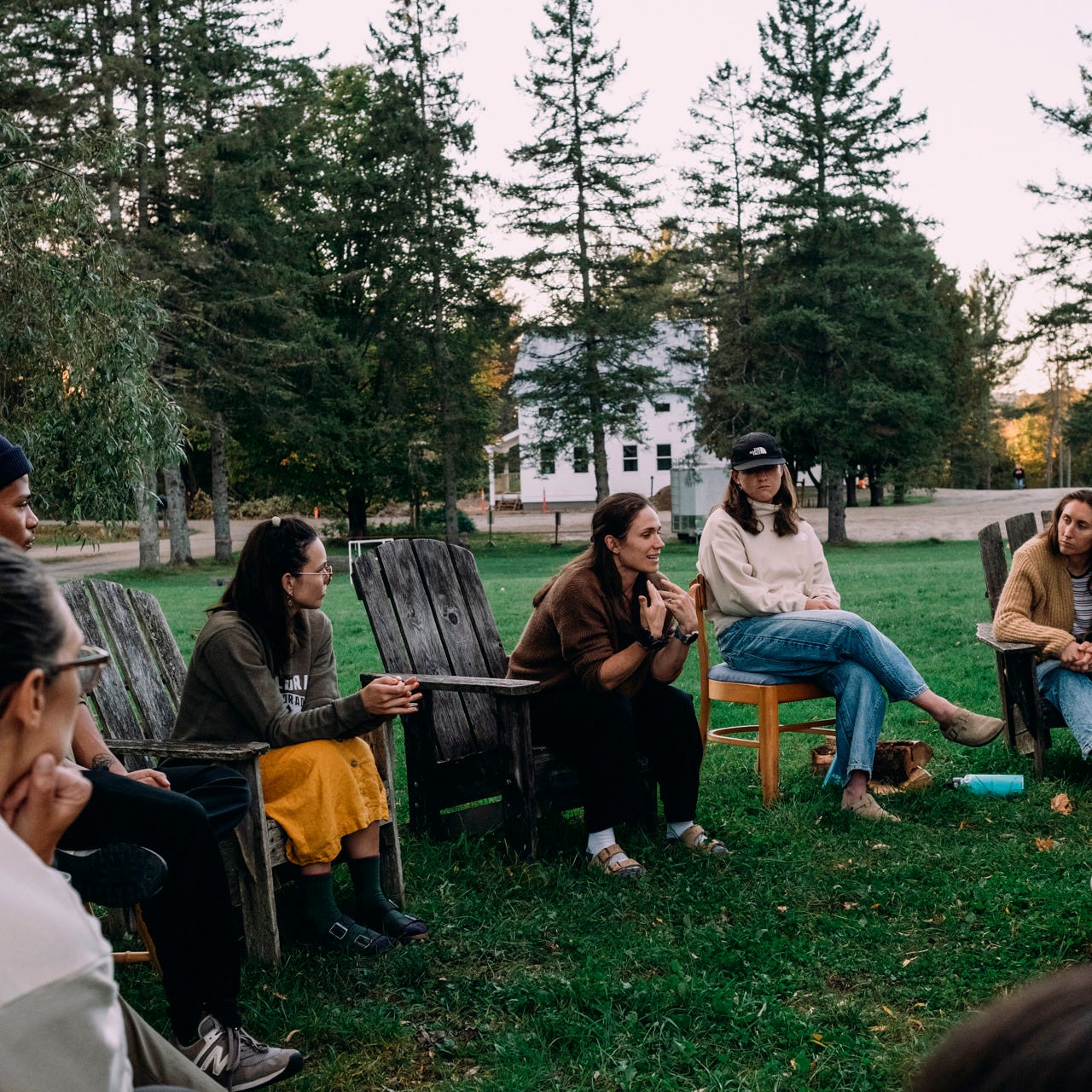
By contrast, a disproportionate focus on individual choices is counterproductive because it sets us against each other. If I make lots of personal sacrifices to reduce my impacts, but then I see that you are not making the same kind of sacrifices, the implication is that you personally are negating the efforts that I’m making. The problem becomes your fault, and you become my enemy. Yet both of us would like to stop climate change and see the natural world preserved for future generations. Wouldn’t it be better for us to join hands and find ways to influence the institutions around us, at whatever scale possible?
Individual and systemic change are two ends of a spectrum. Focusing too much on systemic change has the drawback of making you feel impotent and helpless. But it can bring people together in embattled defiance against the people in power who refuse to provide better options.
On the other hand, while focusing on individual choices can empower you to take specific actions, it has the drawback of alienating potential allies. In my view there is nothing more important than finding common ground with people who share your broad goals and doing what it takes to create a united front. As Bill McKibben says, “the best thing you can do as an individual is to stop being an individual.”
The big categories of systemic vs individual actions obscure the gritty reality of trying to live in the real world. Every decision we make is an individual choice that contributes to systemic impacts, while global economic and political systems provide the individual choices we have to choose between. It’s a circle of interdependency that betrays easy answers. Trying to live a good life is far from simple. Do you have to deny yourself every luxury for the sake of the world? Can you justify every indulgence based on statistical impact?
It’s important to answer these questions for yourself, and to be able to change those answers as your life changes. What’s more important than the answers is an honest engagement with the questions. The integrity of that pursuit can bring people together, even if our answers differ.
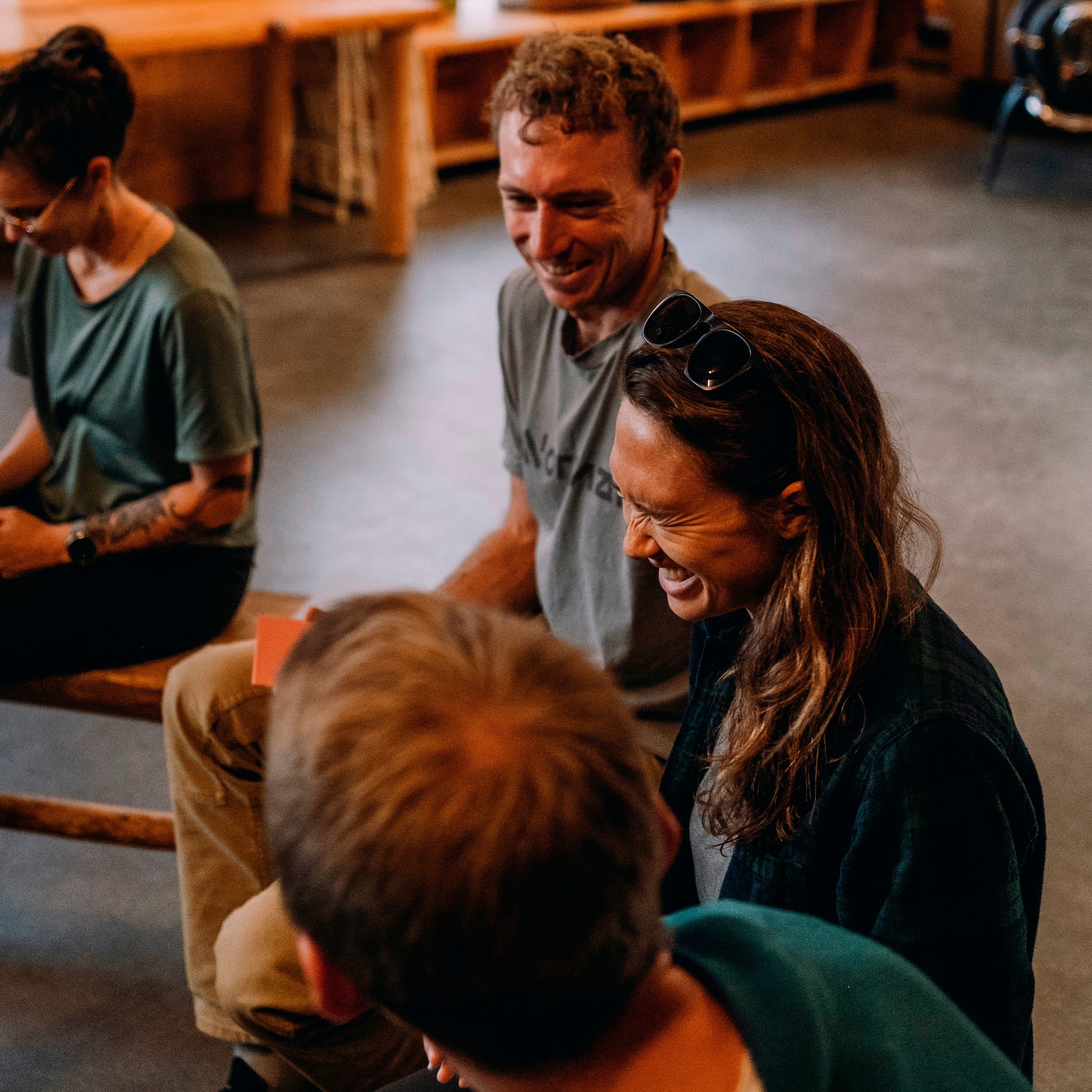
There are many resources for learning about climate change and climate action. I have included just a handful below that have influenced how I think about these topics. I’d love for you to leave comments with further opportunities for learning!
· A good resource for understanding how to make personal changes is Bonpote (largely in French, but they have an English option too)
· A good resource for understanding how to participate in systemic changes is 350.org
· Why personal-vs-systemic change may be an unnecessarily binary viewpoint is on Sustainability by the Numbers
· What If We Get It Right By Ayana Elizabeth Johnson is a beautiful description of what a sustainable and just society can look like in the future
Many thanks for sharing these thoughts. As an energy engineer i do really agree the approach of reducing our energy footprint, which has not only an ecological meaning, but also an economic (and politic).
I think that the a way to lower my impact is compare my habits to those of a common person, not to the farest person from society, and try to do better than him.
The reason is that we (and with “we” I mean those who can use socials, move for hobbies and work, etc) have to face the fact that we live a life in which the comforts we are used to have an impact. The point is try to move those comforts to a “greener way” and, as persons and societies, challenge the common person to do its best day by day.
Moving electric (cum granu salis) with hp or EVs is the way and the world will go that path, not only for ecology but for economy: solar, wind, nuclear tec cost less than fossil fuels and will cost less and less in the future (everything changes with energy markets, but that’s another story). We just need to find the right balnce and technology to orchestrate all of them.
Having said so, Taking an airplane is just a part of a person’s footprint, the attitude to our planet is a lifetime balance, not an issue of a trip!
A favorite mantra of mine is "be ruthless to systems, be kind to individuals" – you do a great job of expanding on this ideology here.
Even though I feel slightly attacked as someone who co-owns a small brand in the running/endurance space (kidding), I would be curious to hear your views around the mindset that the best way to change something is to be part of it. I just published a substack on "over-consumption" in running which is really a critique of capitalistic marketing. I hope I can combat that through the way we make business decisions, but I often question if you can be successful doing that in a system that's intentionally rigged against it.
Anywho, thanks for not shying away from these topics and being a voice for progress.